Introduction: The Illusion of Security Shattered
For years organizations relied on Endpoint Detection and Response systems to protect endpoints. EDR promised detection visibility and rapid response. The assumption was that if an attacker breached the perimeter the EDR would alert contain the threat and provide forensic data. This model is now obsolete. Attackers no longer bypass defences but actively disable them. Modern attacks focus on neutralizing security before deploying ransomware. Tools like EDRKillShifter and BYOVD exploits of signed drivers allow attackers to terminate agents manipulate the system and operate undetected. A reactive security posture is no longer sufficient. The defence must move to autonomous kernel level prevention that neutralizes threats in milliseconds before execution.
EDR was designed to monitor endpoint activity detect malicious patterns and respond. Its reactive nature is now a weakness. Attackers begin with a disarm phase targeting the EDR using tools. Once the EDR is disabled, attackers freely conduct operations like credential dumping, lateral movement, data exfiltration, and ultimately file encryption without fear of detection. This reality demands a shift from human led response to machine speed prevention, operating in microseconds. The future of endpoint security is not better alerts it’s no alerts, because threats are neutralized before they can execute. This requires a new approach focused on prevention rather than response. Security must operate at machine speed to stop threats before they trigger alerts.

What are the BYOVD attacks?
In general, BYOVD attacks are used to disable EDR and security solutions, which can only be done by the SYSTEM user, bypassing tampering protections and using a more stealth approach rather than stopping the EDR service directly using a command like “sc stop”
Ex: BioNTdrv.sys driver vulnerabilities
- CVE-2025-0288: Arbitrary kernel memory writes caused by the improper handling of the “memmove” function, allowing attackers to write to kernel memory and escalate privileges.
- CVE-2025-0287: Null pointer dereferences arising from a missing validation of a” MasterLrp” structure in the input buffer, enabling the execution of arbitrary kernel code.
Attackers Toolkit: How EDRKillShifter and BYOVD Neutralize Your Defences
The modern attacker’s arsenal contains specialized weapons designed specifically for the pre emptive neutralization of endpoint security solutions. These tools, often collectively referred to as “EDR killers,” are not crude or simplistic; they are sophisticated pieces of malware that leverage deep knowledge of Windows internals and security architectures to achieve their goals. Among these, EDRKillShifter has emerged as a prominent and widely shared tool, representing a dangerous evolution in attacker capabilities. Its effectiveness lies not in a single, novel exploit, but in its modular design and its use of a powerful, subversive technique known as Bring Your Own Vulnerable Driver (BYOVD). BYOVD attacks exploit a fundamental trust mechanism in modern operating systems: the digital signature. Drivers, especially kernel mode drivers that have direct access to the core of the operating system, must be digitally signed by a trusted Certificate Authority (CA). This signature is intended to guarantee the driver’s authenticity and integrity, ensuring it comes from a legitimate source and has not been tampered with. Attackers, however, have turned this security feature into a weapon. They scour the ecosystem for legitimate drivers from reputable hardware or software vendors that contain known security vulnerabilities flaws that allow for arbitrary code execution or privilege escalation. These drivers are often old, deprecated, or designed for specific hardware that is no longer common, but their digital signatures remain valid. The attacker then “brings” this vulnerable, yet validly signed, driver onto the target system as part of their malware payload. Because the driver is properly signed, Windows willingly loads it into the highly privileged kernel space. Once loaded, the malware executes the exploit code, triggering the driver’s vulnerability and gaining kernel level privileges.
EDRKillShifter is a prime example of this BYOVD methodology put into practice. First emerging in 2024 and associated with ransomware groups like RansomHub also tracked as Water Bakunawa, this tool has since been adopted by numerous other criminal crews, including Medusa etc.Its modularity allows it to be configured with a variety of vulnerable drivers, making it adaptable and resilient to attempts to block specific driver hashes. Once deployed, EDRKillShifter’s primary function is to systematically identify and terminate the processes and services associated with a wide range of EDR and antivirus solutions from dozens of different vendors.
The success of these tools highlights a critical architectural weakness in traditional EDR solutions. By operating at a lower privilege level or by relying on hooks and callbacks that can be unhooked by a more privileged adversary, they are susceptible to being blinded or disabled. The attacker, armed with kernel level access via a BYOVD exploit, can simply terminate the EDR’s processes, unload its drivers, or patch its code in memory to render it inert. it is a forceful and often irreversible disarmament.
EDRSilencer, takes a slightly different approach but achieves the same goal. It Instead of terminating the EDR process, EDRSilencer identifies the EDR’s network traffic and applies WFP filters to silently drop its alerts and telemetry before they can reach the management console. To the security operations center (SOC), the endpoint appears healthy and connected, while it is completely compromised and unable to report its status. This “blinding by silence” is as effective as outright termination and can be even harder to detect. The proliferation of these killer tools signifies a dangerous democratization of offensive capabilities.
Overview of tools for attacker use:
- EDRKillShifter – Bring Your Own Vulnerable Driver (BYOVD) | Used by RansomHub and Actively terminates EDR processes and services from multiple vendors, effectively disabling the security
- EDRSilencer – Silently blocks EDR network telemetry and alerts, preventing them from reaching the security console while the agent appears to be running
- Custom BYOVD Tools – Exploitation of specific vulnerable drivers (e.g., `BioNTdrv.sys`, `TPwSav.sys`, `WinRing0.sys`) | Used in targeted attacks, such as the exploitation of a Paragon Partition Manager driver flaw and the Qilin ransomware’s use of `TPwSav.sys` Provides kernel-level privileges to attackers, allowing them to disable or bypass security controls, manipulate system data, and achieve persistence.
The Kernel: The New Battlefield and the Imperative for Autonomous defence
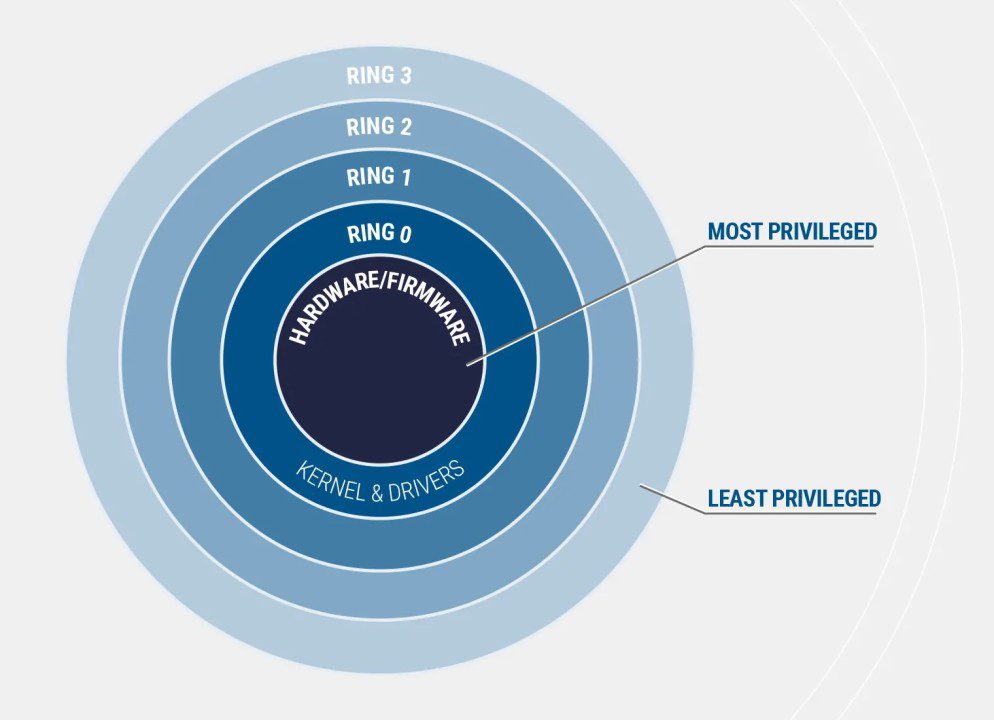
The neutralization of EDR solutions shows that endpoint security now hinges on the kernel, the most privileged layer of the operating system. The kernel controls hardware, processes, and memory, giving attackers with kernel level access full control over the system, including all traditional EDRs. BYOVD attacks exploit this by delivering malicious payloads directly into the kernel, bypassing user mode defences. Reactive security fails in this context, as detection after execution comes too late. By the time alerts are raised, attackers have disabled security, established persistence, and may already be executing ransomware or exfiltrating data. The solution is proactive, autonomous prevention that operates at machine speed, neutralizing threats in microseconds before execution. Defence must be kernel based and independent of human intervention to match the attacker on their own battlefield.
Autonomous, kernel level defence is the next frontier in cybersecurity, focusing on prevention rather than detection. It identifies and stops attack techniques in real time before damage occurs. A kernel based platform monitors and controls system operations with full authority, blocking exploits like BYOVD attacks and preventing termination of security processes. This proactive approach ensures threats are neutralized before they can act, restoring control where attackers seek to eliminate visibility.
Fortifying the Kernel: Strategies for a Proactive defence Posture
Defending against kernel level attacks requires hardening systems through OS controls, advanced endpoint platforms, and a prevention focused mindset. Combining these measures raises the effort for attackers and creates resilient defense in depth. A hardened kernel posture leverages built in security while deploying purpose built solutions to counter BYOVD and EDR killers. The goal is to constrain attackers, provide autonomous countermeasures, and maintain system integrity, ensuring the environment can defend itself and prevent successful attacks.
One of the foundational steps in this hardening process is the rigorous enforcement of driver control policies. Like Microsoft provides a powerful, though often underutilized, mechanism for this Vulnerable Driver Blocklist. This is a continuously updated list of drivers, identified as having known vulnerabilities that are commonly exploited in BYOVD attacks, which are prevented from loading by the Windows Defender Application Control (WDAC) feature
- Driver Control Policies –> Enforce the Microsoft Vulnerable Driver Blocklist via Windows Defender Application Control (WDAC) to prevent known BYOVD drivers.
- Advanced Anti-Ransomware Platforms –> Real time detection and neutralization of BYOVD exploits.
- Kernel-Level Hardening –> Embedding autonomous defences to prevent process termination, maintain visibility, and ensure control
- Holistic Security Philosophy –> Shift from reactive compliance driven strategies to proactive, threat informed resilience.
By combining hardened OS configurations, autonomous kernel level platforms, and a proactive mindset, organizations can reclaim the initiative in endpoint security, making the cost of attack prohibitively high and preventing ransomware campaigns before they cause damage.
Conclusion: Reclaiming the Initiative in the Kernel Level Arms Race
Modern cyberattacks now target the kernel the deepest layer of the operating system where traditional defenses can’t reach. Reactive tools like EDR respond only after detecting malicious behavior, but attackers today move faster than alerts, using signed drivers and kernel exploits to disable protections before launching their payloads. To counter this, cybersecurity must evolve from reaction to prevention. True protection requires proactive, kernel-level defense, autonomous systems that operate at the same depth as the threat, detecting and neutralizing malicious activity within microseconds, before execution ever begins. This marks the shift to defense at machine speed, where prevention replaces reaction and security finally outpaces the attack.
References:
https://cymulate.com/blog/defending-against-bring-your-own-vulnerable-driver-byovd-attacks
https://www.halcyon.ai/blog/understanding-byovd-attacks-and-mitigation-strategies
https://www.binarly.io/blog/signed-and-dangerous-byovd-attacks-on-secure-boot
https://thehackernews.com/2025/09/silver-fox-exploits-microsoft-signed.html
https://www.msspalert.com/news/halcyon-expands-anti-ransomware-platform-to-address-kernel-level-and-data-exfiltration-threats
https://learn.microsoft.com/en-us/windows/security/application-security/application-control/app-control-for-business/design/microsoft-recommended-driver-block-rules
https://www.trendmicro.com/en_us/research/24/j/edrsilencer-disrupting-endpoint-security-solutions.html
https://www.trendmicro.com/en_gb/research/24/a/kasseika-ransomware-deploys-byovd-attacks-abuses-psexec-and-expl.html
https://thehackernews.com/2025/03/hackers-repurpose-ransomhubs.html